
Define the condition
The owner, CxA and engineering team establish the operating condition, scenario and acceptance requirements.
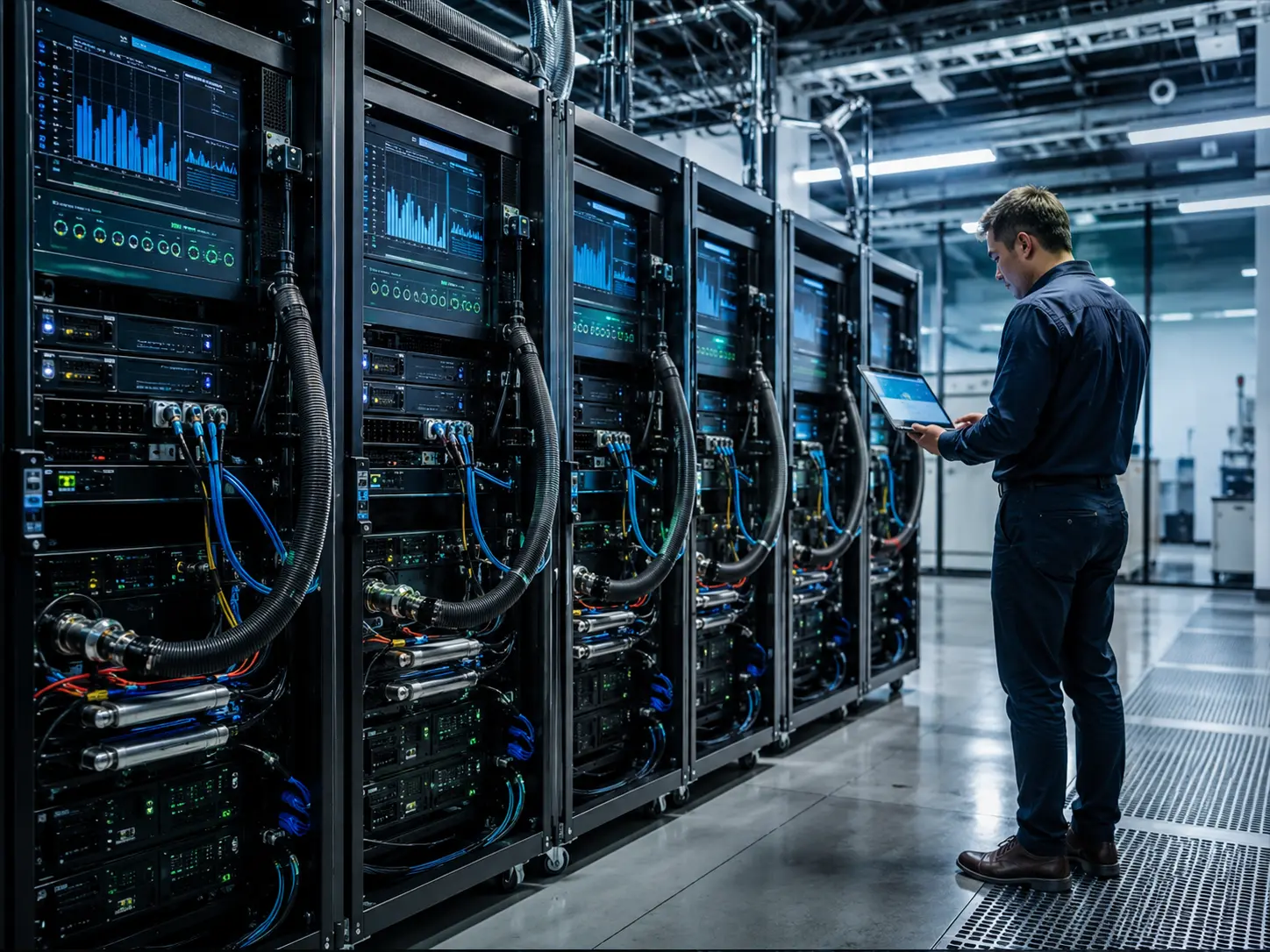
Commissioning use | Functional performance
Functional performance testing verifies how individual systems and subsystems respond under intended operating conditions and planned failure scenarios. Controllable load equipment creates repeatable demand without relying on production compute.
Functional performance
Many mission-critical projects refer to this stage as Level 4 or Functional Performance Testing. Exact terminology, responsibilities and procedures are defined by the project commissioning plan.
Controlled electrical and thermal load equipment can support testing of:
Why realistic load matters
Systems may respond differently as power demand, thermal output, flow or control interaction approaches intended operating conditions. Controlled load lets the project team progressively exercise infrastructure at defined operating points while production compute remains outside the test.
Load levels, duration, sequences and pass/fail thresholds are project-specific. AMOR configures and operates the equipment against the approved procedure rather than imposing universal criteria.
From procedure to test condition
The CxA directs the test. AMOR supports the temporary load condition and equipment response required to execute it.
The owner, CxA and engineering team establish the operating condition, scenario and acceptance requirements.
AMOR aligns equipment capacity, electrical and liquid interfaces, control grouping and deployment with the approved procedure.
Loads are introduced and changed at the approved operating points while the project team witnesses system response.
Predictable load conditions allow testing, issue resolution and repeat runs without production servers.
AMOR supports equipment operation, troubleshooting and equipment-side data capture where applicable.
Representative applications
Test scenarios remain defined and witnessed under the project commissioning plan.
UPS loading, generator response, transfer devices, distribution paths and redundancy.
Busway, rack PDU and branch-path behaviour under controlled rack demand.
CDUs, pumps and controls responding to rack or zone thermal load.
BMS, EPMS and equipment alarms observed as approved operating conditions change.
Related commissioning equipment
Ratings, interfaces and protection details are published on the equipment pages and in the approved AMOR datasheets.
Why AMOR
AMOR combines specialized temporary load equipment with the coordination, electrical capability and technical response required to deploy it around real construction schedules.
Equipment availability and deployment capacity are confirmed against each project's schedule and requirements.
Technical discovery
Share what is currently known. These details guide the first technical review and do not all need to be complete before a discussion.