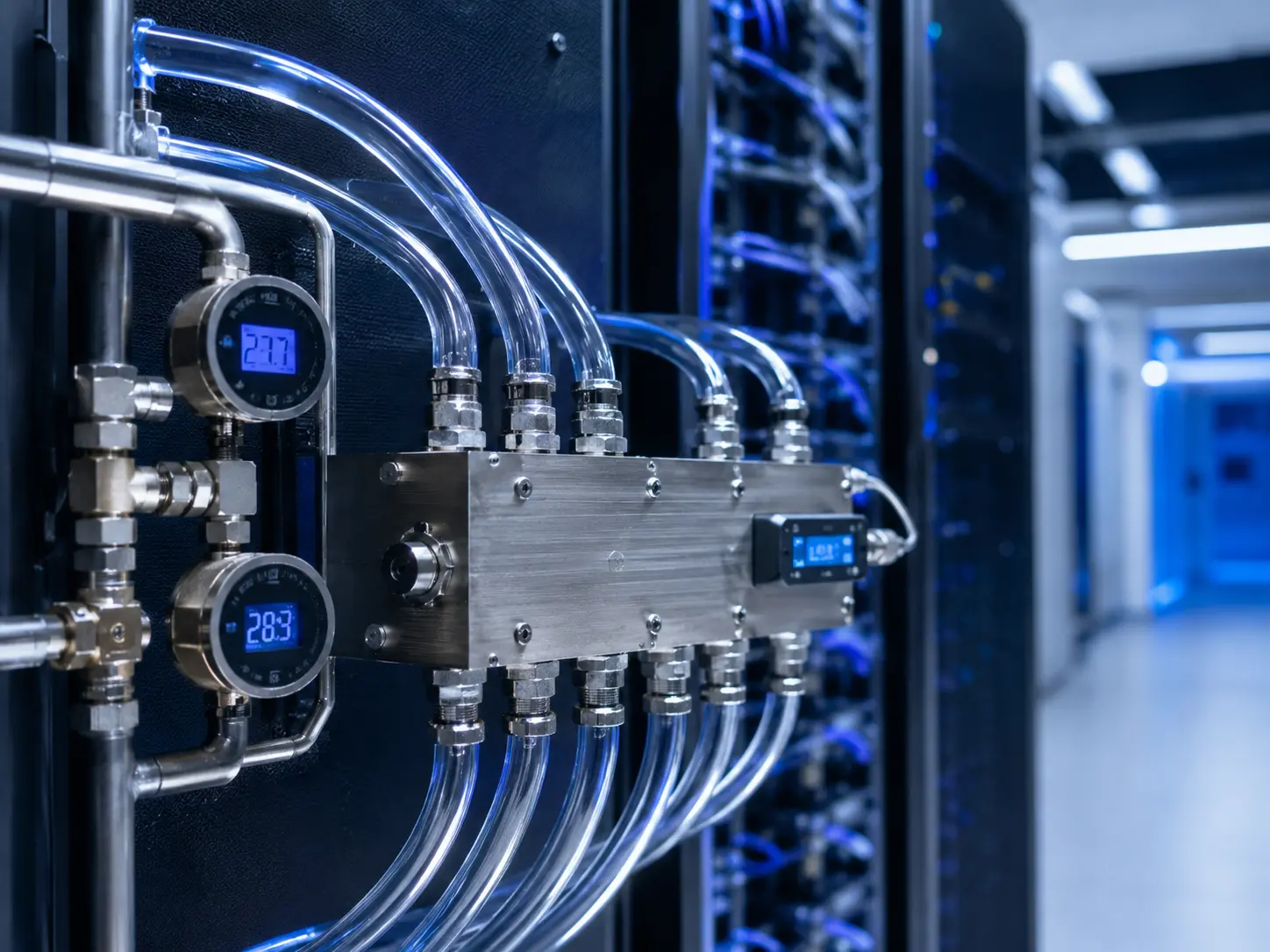
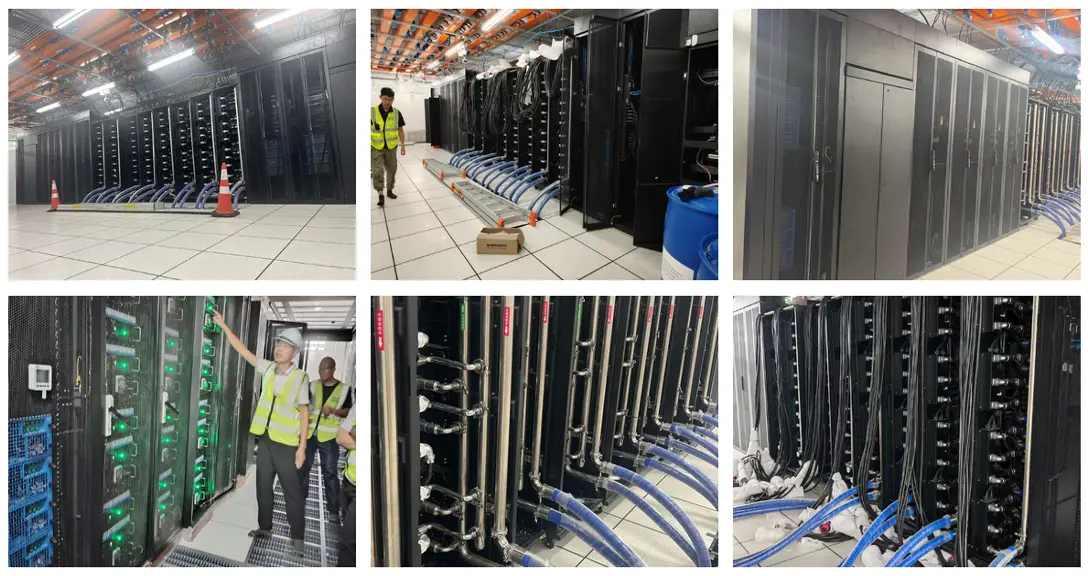
Commissioning teams need meaningful electrical and thermal load before live IT equipment is available. Without that load, a generator may run, a UPS may energize and a cooling system may circulate fluid, but the project has not necessarily observed how those systems perform near the conditions they were designed to support.
Temporary load banks and rack emulators create those conditions in a controllable way. The important question is not whether one device is an “L4 load bank” or an “L5 load bank.” It is which infrastructure layer must be loaded, what the approved procedure is intended to prove, and how the load must behave while systems change state.
A Typical Mission-Critical Commissioning Progression
Many mission-critical projects use Level 4 and Level 5 terminology, although exact definitions, boundaries and test procedures vary by owner, CxA and commissioning framework. A common progression moves from factory or pre-delivery activity through installation checks and start-up, then into functional performance, heat-load and integrated systems testing before handover.
The progression is not purely chronological. Issues discovered during a later stage can send the team back to correct installation, controls or start-up conditions and repeat earlier tests. Heat-load testing may be a distinct stage, part of functional performance testing, part of IST preparation, or distributed across several packages.
Temporary load becomes particularly important once the project needs to observe performance rather than basic energization. It creates a known reference condition that can be increased, held and repeated while the project team assesses the infrastructure response.
What Is Commonly Referred to as Level 4?
Level 4 is commonly associated with Functional Performance Testing (FPT): exercising individual systems and subsystems under expected operating conditions and planned abnormal conditions. The project may evaluate generator and UPS response, switchgear and transfer devices, electrical distribution, cooling equipment, CDUs, pumps, rack distribution, controls and alarms.
The word “functional” matters. A component can be started without proving how the system performs while carrying the intended demand. Controlled load creates an operating condition against which voltage, current, temperature, flow, pressure, control response and alarms can be observed according to the approved procedure.
Load should be progressive and repeatable. The test team may need to approach an operating point in stages, hold it while the system stabilizes, change a condition, and return to the same point after an adjustment. Universal load percentages or timing thresholds should not be inferred; those values depend on the design and commissioning plan.
What Is Commonly Referred to as Level 5?
Level 5 is commonly associated with Integrated Systems Testing (IST). Rather than focusing on one system in isolation, the test observes how electrical, mechanical, controls and backup systems interact during planned operating and failure scenarios.
Representative categories can include loss of utility, generator response, transfer sequences, UPS operation, redundant-path transitions, cooling-component failure, pump or CDU transitions, control and alarm response, and recovery to normal operation. The actual sequence, timing, witness points and pass/fail criteria are confidential and project-specific.
For IST, the load condition must remain predictable while the infrastructure changes state. Several load technologies may operate simultaneously in different parts of the facility. A repeatable setup also allows a scenario to be rerun after a problem is corrected, providing a consistent basis for comparison.
Where Do MW-Scale Load Banks Fit?
MW-scale load banks address the facility electrical layer. They create substantial controlled demand for generators, UPS systems, transformers, switchgear, feeders and emergency distribution without requiring the full production IT load to be present.
Their role can begin during functional testing of an electrical package and continue into wider integrated scenarios. Several banks may be distributed across the facility so different paths, blocks or redundancy arrangements can be loaded in a way that reflects the approved plan.
Voltage class, connection method, resistive capacity, any reactive requirement, control grouping and placement are project decisions. The capability should be described as project-configured rather than assumed to be a standard stocked arrangement for every site.
Where Do AI Rack Emulators Fit?
AI rack emulators apply controlled electrical and thermal demand close to the intended compute connection. They are useful when the test must include rack busway or PDU paths, individual rack branches, CDU branches, secondary liquid loops, or the hybrid split between liquid and room heat.
A hybrid rack emulator can exercise both liquid and air-side infrastructure. A full-liquid emulator concentrates the thermal output in the liquid loop. This distinction matters because the mechanical systems being observed—and the sensors, controls and rejection paths carrying the heat—are different.
Rack emulators can support both functional and integrated work. During FPT, a device may load a specific branch or CDU connection. During IST, groups of emulators can maintain known rack-level demand while the facility electrical or cooling path transitions.
Where Do Liquid Load Banks Fit?
High-capacity liquid load banks address cooling-system scale beyond an individual rack. They can create thermal demand for a CDU, liquid distribution zone or hall, supporting capacity, stability, redundancy, retrofit and expansion testing.
This equipment is particularly useful when a cooling asset is larger than the rack load available during commissioning, or when the project needs to observe the response of multiple pumps, valves, heat exchangers or facility heat-rejection components together.
Liquid load does not remove the need for electrical coordination. The equipment itself draws electrical power, and the thermal condition it creates can affect wider facility sequences. Its deployment therefore belongs within the integrated power-and-cooling plan.
Why One Type of Load Bank Is Not Enough
Modern AI commissioning spans at least three distinct load layers. Facility electrical infrastructure may require MW-scale load. Rack distribution and branch interfaces require rack-scale electrical demand. Liquid cooling requires controlled thermal load at the rack, CDU, zone or hall level.
A conventional electrical load bank can prove upstream power equipment but may reject heat in a location that does not exercise the intended rack cooling path. A liquid load system can prove cooling capacity but may not represent every rack electrical interface. A rack emulator can reproduce local demand but may not be large enough to load an entire generator or central plant.
Successful IST increasingly depends on coordinating these technologies. The load plan should identify where power is consumed, where heat is rejected, which systems must operate simultaneously, how equipment is grouped, and how the condition will remain stable through each approved scenario.
Who Defines the Test?
The owner, CxA and project engineering team define the commissioning plan, scenarios, acceptance criteria, responsibilities and documentation requirements. Contractors and OEMs contribute their system knowledge and execute work within that governance structure.
AMOR supplies appropriate temporary loading equipment and supports deployment, setup, operation, adjustment and troubleshooting. That role includes translating known project requirements into equipment capacity, interfaces, staging, staffing and field logistics, then supporting the equipment condition while the approved test is directed and witnessed.
AMOR supports execution of the approved commissioning plan; AMOR does not replace the project Commissioning Authority unless separately contracted for that role. Keeping that boundary explicit improves coordination and prevents an equipment supplier from being mistaken for the party that defines or certifies acceptance.
Sources & further reading
Public technical references
These sources support the industry context. The analysis and commissioning perspective above are original AMOR content.