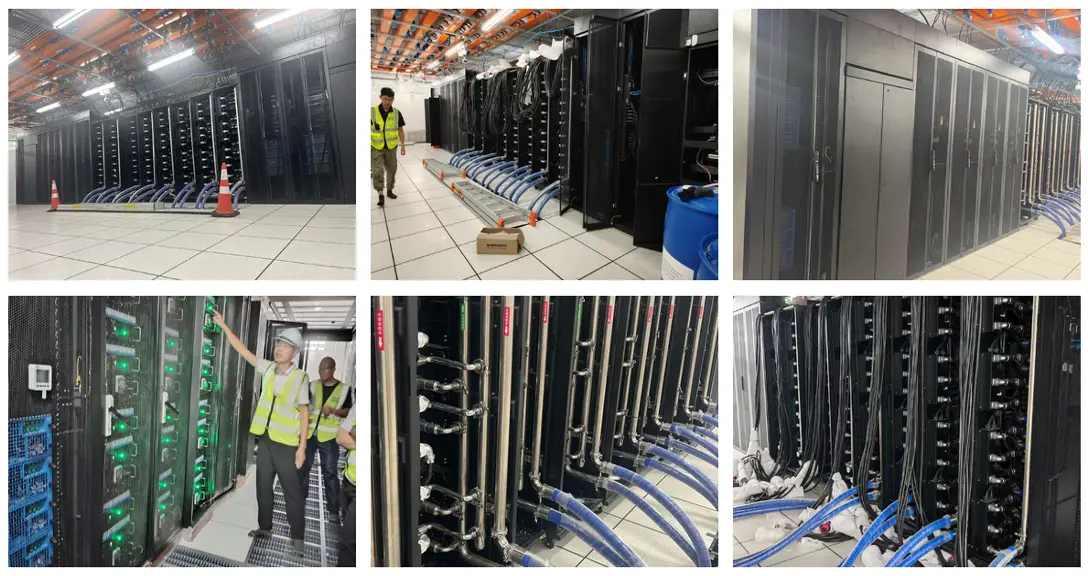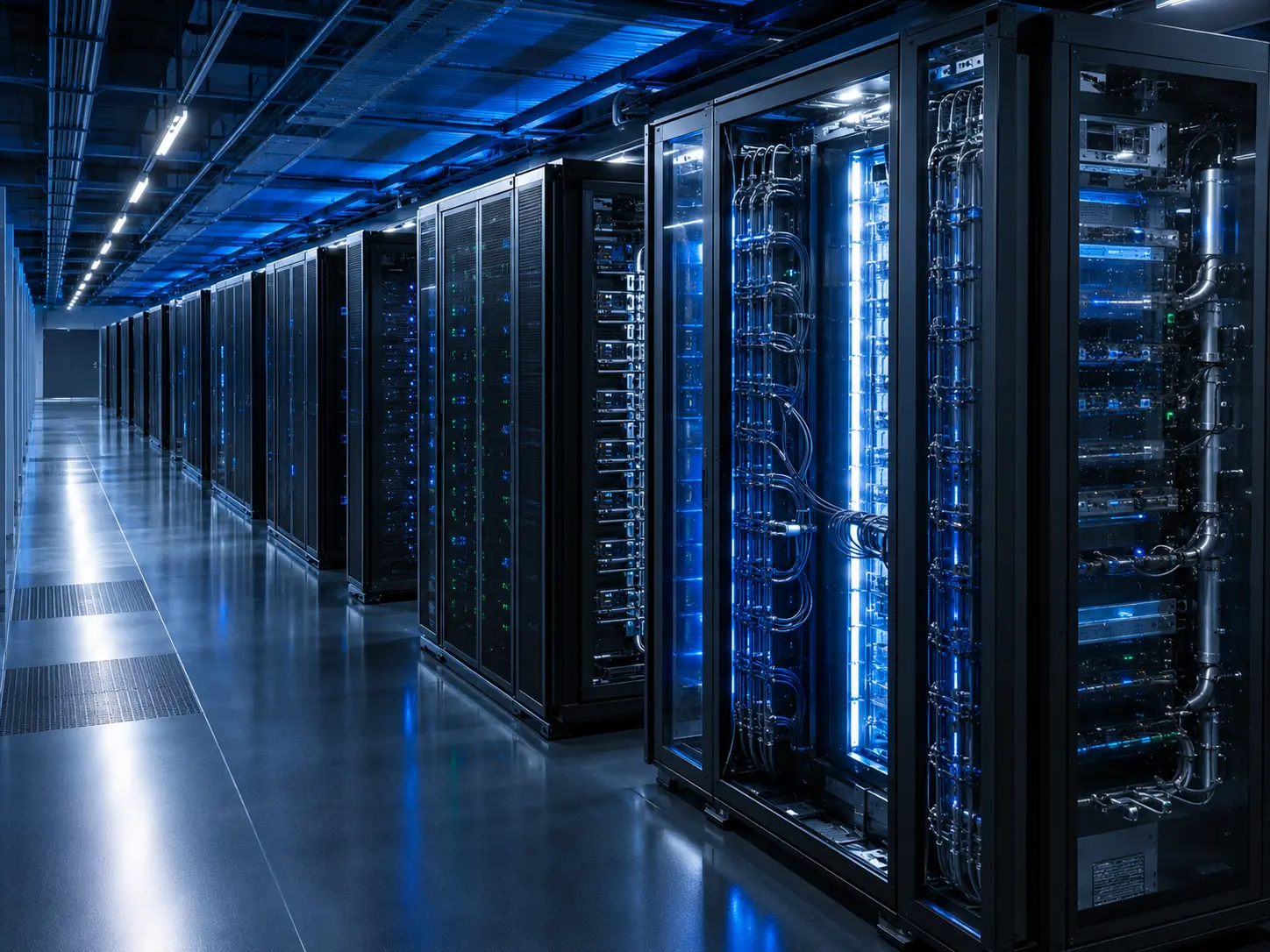
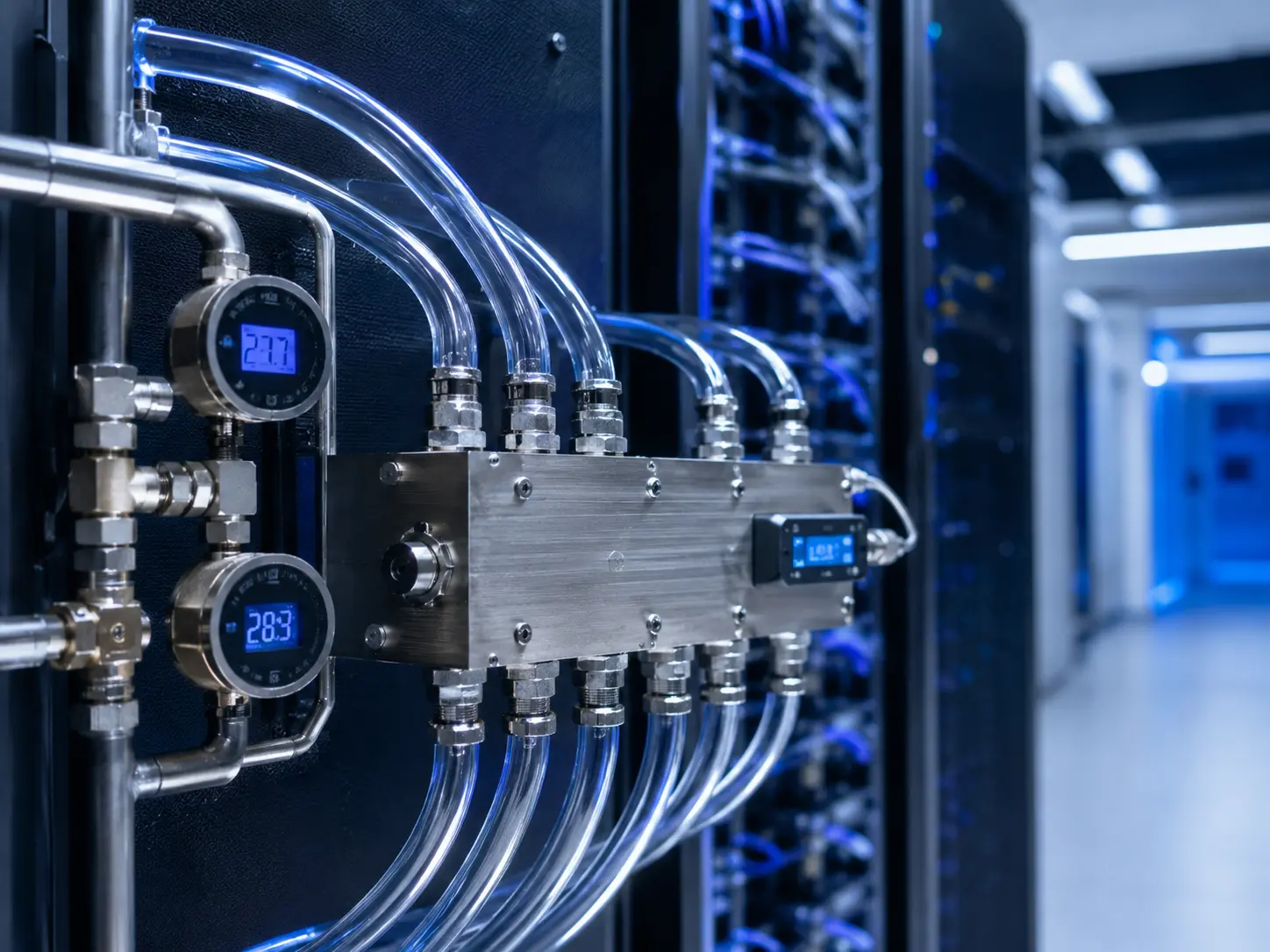
A high-density AI data centre can be mechanically complete while its most important operating load is still missing. Production racks may arrive late in the programme, in phases, or only after the project team is expected to demonstrate that the facility can support them. Yet switchgear, UPS systems, generators, rack distribution, coolant distribution units (CDUs), secondary loops and heat-rejection systems still have to be exercised under meaningful conditions.
Using production compute as the first full-load test creates an unnecessary concentration of risk. Temporary controllable loads provide a safer alternative: they convert electrical demand into known air-side and liquid-side heat, allowing the approved commissioning plan to be executed without depending on live AI servers. The objective is not to imitate every electronic behaviour inside a server. It is to reproduce the infrastructure demand that power and cooling systems must reliably support.
Why AI Data Centres Change the Commissioning Problem
Conventional server rooms were often commissioned with predominantly air-cooled temporary loads and comparatively modest rack densities. High-density AI environments can be different in several ways at once: more electrical power is concentrated at each rack, much of the heat may be captured through direct-to-chip liquid cooling, and the remaining heat may still enter the room through power supplies, memory, networking and other components.
That creates an interdependent power-and-cooling problem. A rack power path cannot be considered in isolation from the CDU and secondary loop serving it. Likewise, a CDU capacity test is incomplete if the thermal source is unstable or cannot be stepped and repeated. The facility water system, pumps, controls and heat-rejection plant must respond to the heat created by the same electrical demand being observed upstream.
There is no single AI rack architecture. Power density, voltage, liquid fraction, flow requirements, allowable temperatures, redundancy and connection methods vary by platform and project. Commissioning equipment therefore has to be selected against the actual design basis and approved test procedure—not a generic assumption about what an AI rack looks like.
What Needs to Be Proven Before Production Compute Arrives?
The commissioning plan is established by the owner, Commissioning Authority (CxA) and project engineering team. Within that plan, temporary load may be used to establish operating conditions for electrical, mechanical and controls testing. The exact load points, durations, transitions and acceptance criteria remain project-specific.
On the electrical side, the project may need to demonstrate the performance of utility interfaces, transformers, switchgear, UPS systems, generators, transfer devices, busway, rack PDUs and redundant distribution paths. On the mechanical side, the team may need to observe CDU capacity, pump operation, flow distribution, pressure and differential pressure, supply and return temperature, heat-exchanger response and facility heat rejection.
Controls connect those systems. Alarms, interlocks, sequencing, monitoring, trend capture and recovery behaviour must be observed while the infrastructure is carrying a known load. A temporary system is useful precisely because the demand can be staged, held, changed and repeated while the project team investigates system response.
- Electrical capacity and distribution-path performance
- CDU, pump and liquid-loop response
- Air-side and facility heat-rejection capacity
- Controls, alarms, transitions and recovery
- Redundant operation under approved failure scenarios
The Role of AI Rack Emulators
An AI rack emulator is a temporary controllable load system configured at rack scale. It draws electrical power through the intended temporary or permanent rack interface and converts that power into a predictable thermal output. Depending on the platform, heat can be rejected to a liquid loop, to room air, or to both.
Rack-scale equipment matters because it places demand close to the infrastructure being proven. Branch circuits, busway tap-offs, rack PDUs, CDU branches, hoses, manifolds and local controls can be observed together. Progressive loading and fine control resolution allow the test team to approach defined operating points without committing immediately to full capacity, then reproduce the same condition after adjustments are made.
AMOR’s 240 kW Hybrid Air + Liquid AI Rack Emulator divides its total load into 192 kW liquid-side and 48 kW air-side heat rejection, with 1 kW loading resolution. The 300 kW Full-Liquid AI Rack Emulator applies a 300 kW liquid thermal load, also with 1 kW resolution. These are different tools for different rack heat profiles; neither should be treated as a universal representation of every AI platform.
From Rack Load to Cooling-Zone Load
A rack emulator can prove a branch or rack connection, but a single rack may not create enough demand to evaluate a large CDU, cooling zone or hall. Capacity and stability questions often emerge only when several branches operate together or when a larger portion of the liquid distribution system is carrying load.
High-capacity liquid load banks extend the same principle beyond the individual rack. AMOR’s 300–600 kW family provides standard 300, 400, 500 and 600 kW liquid-cooled platforms. Units can be selected or combined around the project requirement to exercise CDU capacity, liquid distribution, thermal stabilization, redundancy, retrofit conditions or planned expansion.
The distinction is useful: rack emulators reproduce the rack connection and rack-scale heat profile; larger liquid load systems create concentrated thermal demand for a CDU, zone or hall. A commissioning programme may use both, either at different stages or simultaneously, depending on what the approved procedure is intended to prove.
What About the Facility Electrical System?
Liquid cooling is only one part of the commissioning problem. Even when rack and CDU interfaces are the immediate focus, the data centre still depends on the wider electrical infrastructure supplying those loads. Generators, UPS systems, switchgear, transformers, feeders and emergency-power sequences may need substantially more load than rack-scale devices alone can provide.
MW-scale LV/MV commissioning load banks create facility-level electrical demand without requiring production IT equipment. They can be configured as individual units or modular multi-bank deployments, with the voltage class, resistive loading and any project-specific reactive requirement selected against the approved test plan.
The facility and rack layers are complementary. MW-scale banks can establish the broader electrical condition while rack emulators and liquid loads place demand at specific distribution and cooling interfaces. Coordinating those layers gives the project team a more representative view of how power and cooling infrastructure interact.
Functional Testing, Heat-Load Testing and IST
Commissioning terminology and stage definitions vary by owner, CxA and delivery framework. Many mission-critical projects refer to Functional Performance Testing as Level 4 and Integrated Systems Testing as Level 5, while others organize heat-load testing as a separate workstream or place it within those stages. The approved project commissioning plan governs.
During functional testing, controlled load can establish meaningful operating conditions for individual systems and subsystems: a UPS carrying demand, a CDU responding to a known heat input, or a pump and control loop operating across a defined range. During heat-load testing, rack and zone equipment can introduce thermal demand so flow, temperature, pressure, capacity and recovery are observed across the cooling path.
During IST, the emphasis shifts to interaction. Electrical, mechanical and control systems may change state together while the temporary load remains known and predictable. Repeatability is valuable because a scenario can be run again after an issue is corrected without depending on the availability or behaviour of production servers.
Why Field Support Matters
Large temporary loads are not plug-and-play accessories. They must be matched to the rack and facility architecture, transported and staged around an active construction programme, connected to temporary or permanent electrical interfaces, and hydraulically connected to secondary loops where applicable. Settings, grouping, communications and protection must be confirmed before the equipment is released for test use.
During a test window, equipment may need to be loaded in stages, held at defined conditions, repositioned, reconfigured or troubleshot as site conditions change. The equipment team also needs to coordinate with the CxA, owner, general contractor, electrical contractor, mechanical contractor and controls teams without crossing role boundaries.
AMOR provides commissioning equipment, deployment capability and field technical support under the approved project commissioning plan. Depending on scope, that may include requirement review, equipment configuration, mobilization, temporary electrical and liquid-interface coordination, setup, operating support, troubleshooting, equipment-side data support and demobilization. The owner and CxA retain responsibility for the plan, scenarios and acceptance criteria.
The Goal: Prove the Infrastructure Before the Compute Is at Risk
Temporary load does not replace engineering judgment, commissioning governance or the final validation of production systems. It gives the project team a controlled way to find infrastructure problems earlier—before highly valuable compute hardware becomes the test instrument.
A credible plan begins with the intended rack architecture and works outward: rack power, liquid and air heat split, CDU and secondary loop, facility water and heat rejection, electrical distribution, backup power, controls and recovery. The right equipment mix follows from that architecture and from the specific questions the approved commissioning procedure must answer.
Sources & further reading
Public technical references
These sources support the industry context. The analysis and commissioning perspective above are original AMOR content.